Marine Collagen Benefits: What Does Marine Collagen Do?
Discover what marine collagen does for skin, hair, nails, and joint health. Learn effective intake methods, benefits, and optimal daily dosage for maximum results.

What is collagen and why is it important?
Collagen is the most abundant protein in the body. It plays a crucial role in maintaining skin, hair, nails, and joint health. This protein is a major component of connective tissues. As we age, collagen production decreases. This leads to common signs of ageing, such as wrinkles and joint discomfort. Supplementing can help counteract these effects by supplying the necessary proteins. Collagen consists of amino acids like glycine and proline. These are essential for tissue repair and maintenance. Collagen's amino acids are also important for cardiovascular health. There are several types of collagen, each with specific functions:
- Type I: Supports skin, hair, and nails.
- Type II: Primarily found in cartilage.
- Type III: Works alongside Type I in skin and blood vessels.
What is the difference between marine and bovine collagen?
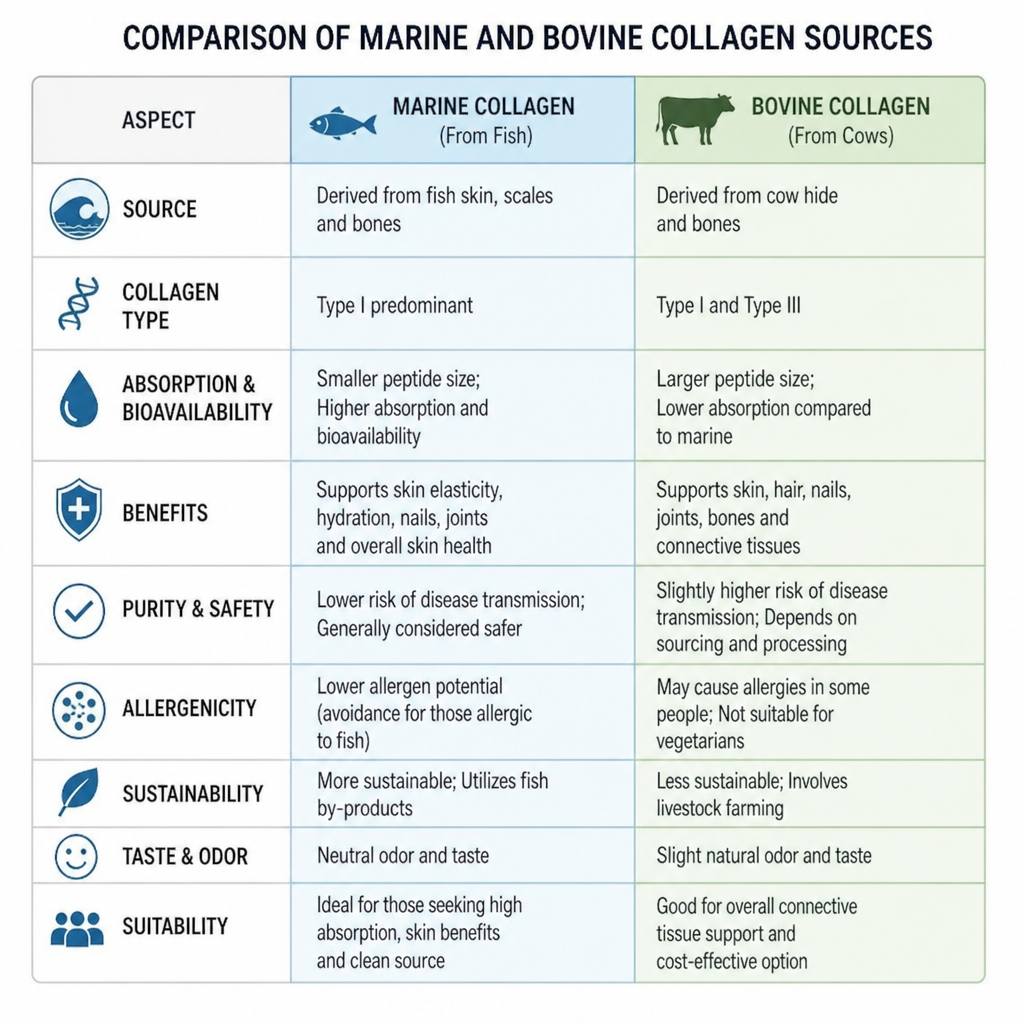
Collagen supplements often come from either marine or bovine sources. Understanding the differences can help you choose the best option. Both types offer unique benefits and have distinct properties. Marine collagen is derived from fish, usually the skin or scales. It's known for high bioavailability, meaning the body absorbs it easily. This type mostly contains Type I collagen, which benefits skin, hair, and nails. Bovine collagen comes from cows and is extracted from their hide or bones. It contains both Type I and Type III collagen. These types are beneficial for skin, joints, and gut health. Here's a quick comparison: Marine Collagen: High bioavailability, mainly Type I, supports skin and hair. Bovine Collagen: Rich in Types I and III, supports joints and gut. Marine collagen is often more sustainable and preferable for pescatarians. Bovine collagen, being more readily available, is generally less expensive. Each has unique advantages, making them suitable for different health goals. Ultimately, your choice should depend on your personal dietary needs and health objectives.
What does marine collagen do?
Marine collagen is more than just a skin enhancer. It plays many roles in maintaining overall health. One of its primary roles is promoting skin elasticity and hydration. With age, the skin loses its youthful glow. Marine collagen helps combat this by reducing fine lines and wrinkles. It supports the skin's natural ability to retain moisture and improve texture. Beyond beauty, marine collagen offers joint health benefits. It reduces inflammation, providing relief from joint discomfort. The high concentration of Type I collagen in marine sources supports healthy hair and nails. Regular intake can lead to stronger, more resilient nails and thicker, healthier hair. Marine collagen may:
- Improve skin elasticity and hydration
- Support joint health and reduce inflammation
- Strengthen hair and nails
What are the benefits of marine collagen for skin, hair, nails and joints?
Marine collagen is a powerhouse for skin health. It supports the skin's structure, promoting firmness and elasticity. Hair benefits significantly from marine collagen, too. It strengthens hair strands, making them more resilient to breakage. Nails often show visible improvement with marine collagen. Brittle nails become stronger and less prone to splitting. Joint health is another key area where marine collagen excels. It helps maintain cartilage, aiding in joint flexibility. Some of the potential benefits include:
- Enhanced skin elasticity and reduced wrinkles
- Thicker and healthier hair
- Stronger nails and reduced brittleness
- Joint support for better mobility
How should you take collagen?
Collagen supplements come in several forms to suit different preferences. Powders are popular as they're easily mixed into drinks. Capsules offer convenience for on-the-go dosing, while liquid collagen and chews provide other alternatives. For optimal results, consider integrating vitamin C. It enhances collagen absorption and boosts effectiveness. A balanced diet can further support collagen's benefits. Some key tips include:
- Choose the form that fits your lifestyle: powder, capsule, or liquid
- Add vitamin C for better absorption
- Stick to a consistent routine for noticeable results
- Start with a lower dose and gradually increase
- Combine with a healthy diet for comprehensive benefits
How much collagen should you take per day?
Determining the right amount of collagen varies by individual needs. Factors such as age, health goals, and diet play a role. The general recommendation is 5–10 grams daily. Women often seek collagen for skin and joint health. Men might focus more on muscle recovery and joint support. For women, sticking to 5–7 grams per day can suffice for noticeable results. Men may aim for 10 grams, especially if engaging in strenuous exercise. Consider these dosage guidelines:
- Start with a lower dose: 5 grams per day
- Increase gradually if needed, up to 10 grams
- Adjust based on personal health goals and activity level
- Consult a healthcare professional for personalised advice
Why is vitamin C important when taking collagen?
Adding Vitamin C enhances collagen synthesis. Vitamin C acts as a catalyst, ensuring better absorption and effectiveness. It plays a vital role in binding collagen fibres. Combining marine and bovine collagen can also provide a broader range of collagen types. Marine collagen, primarily Type I, targets skin health, while bovine collagen, rich in Types I and III, supports joints and muscles. Key benefits include:
- Enhanced collagen absorption
- Improved skin elasticity and hydration
- Comprehensive support for joints and muscles
- Added antioxidant protection from Vitamin C
What should you look for in a collagen supplement?
Picking the right collagen supplement is crucial for maximum benefits. Quality should always be your top priority. When shopping, check the sourcing of the collagen. Opt for supplements derived from reputable and sustainable sources. Consider the type of collagen as well. If you're aiming for skin health, marine collagen might be the best choice. Review the ingredient list carefully for added nutrients. Supplements with Vitamin C can boost collagen absorption. Key features to look for include:
- High-quality sourcing
- Added nutrients like Vitamin C
- Transparent labelling
- Third-party testing and certification
Are collagen supplements safe?
Generally, they are well-tolerated. However, always follow dosage guidelines to avoid adverse effects.
How long does collagen take to work?
Many people notice changes in skin elasticity and joint comfort within 4–8 weeks.
Is marine or bovine collagen better?
Marine and bovine collagen have different properties. Marine collagen is mainly Type I collagen, while bovine collagen typically provides Types I and III. Your choice should therefore depend on your dietary preferences and health goals.
Can vegetarians take collagen supplements?
Traditional collagen comes from animal sources, but plant-based options exist that aim to boost collagen synthesis.
Is collagen right for you?
Collagen supplements offer numerous benefits for skin, joint, and overall health. The decision to include them in your routine depends on your health goals and preferences. Consider factors such as lifestyle, dietary restrictions, and specific health concerns. If you seek to improve skin elasticity or support joint health, collagen might be a suitable choice. Consulting with a healthcare provider can help determine the appropriate type and dosage for your needs. Ultimately, collagen can be a valuable addition to a well-rounded wellness regimen.
Evidence / notes:
This is personal editorial research, not medical advice or a professional recommendation.